Biography
Short, medium and long versions, ready to paste into a programme or a listing.
Request bios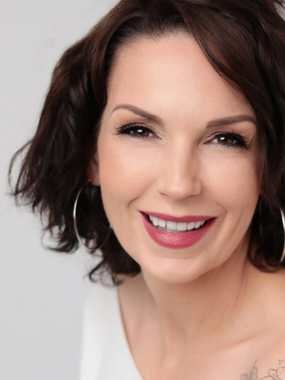
The long version
Kaye spent a decade in work that taught her how people talk about hard things when they think nobody is listening — in waiting rooms, in car parks, in the ten minutes before anyone has to be brave again. She has been writing it down ever since.
Don’t Forget To Laugh began as a set of emails to a friend who was, by any measure, having a worse year than she was. The emails were not supposed to be encouraging. They were supposed to be distracting, and slightly stupid, and they arrived at roughly eleven at night for about fourteen months.
When the friend suggested she keep them, Kaye said no. When the friend suggested it again, eighteen months later, she said yes — on the condition that nothing be tidied up. Almost nothing has been.
She writes early, badly, and in a notes app, and rewrites properly on paper. She is suspicious of advice and does not give any, which has made the publicity slightly awkward.
In short
Writes about
Resilience, family, grief that isn’t tidy, and the specific comedy of institutions.
First book
Don’t Forget To Laugh — twenty-nine short stories, published 2026.
Also found in
Essays and columns on humor as a coping practice, and an occasional newsletter.
Speaks to
Book clubs, workplace groups, healthcare teams and conferences.
Fourteen months of eleven-o’clock messages to one friend. No structure, no intention, no audience beyond the one.
Kaye says no. The suggestion is repeated, at intervals, for a year and a half.
Twenty-nine of the emails survive the edit. Two new chapters are written for the book.
Out in paperback, ebook and audiobook, and read aloud by the author against the advice of several professionals.
Speaking
Kaye speaks to book clubs, workplace groups, healthcare teams and conferences — usually forty minutes, usually with questions afterwards that run long.
Enquire about a talkWhy the ability to find something funny is often the first sign that a person has stopped flinching — and what that means for the people caring for them.
For teams who meet people on their worst day. Practical, specific, and firmly against the phrase “everything happens for a reason”.
A workshop-shaped talk on writing about hard things without sanding them down. Suited to libraries and writing groups.
Readings from the book, some of the material that didn’t make it in, and an unusually long Q&A.
Press
Short, medium and long versions, ready to paste into a programme or a listing.
Request biosAuthor headshots in colour and black and white, print resolution, credit supplied.
Request imagesFront cover at web and print resolution, plus the full paperback wrap.
Request coversSubjects Kaye is glad to be asked about, and the ones she would rather not.
Request notes